Saturday, 21 April 2012
Thermal Energy
Thermal energy is the portion of the thermodynamic or internal energy of a system that is responsible for the temperature of the system. The thermal energy of a system scales with its size and is therefore an extensive property and it is a state function of the system. It is independent of the way or method by which the system attained this energy.


Thermal energy is the part of the total internal energy of a thermodynamic system or sample of matter that results in the system temprature. The internal energy, also often called the thermodynamic energy, includes other forms of energy in a thermodynamic system ina addition to thermal energy, namely forms of potential energy that do not influence temperature, such as the chemical energy stored in its molecular structure and electronic configuration, intermolecular interactions associated with phase changes that do not influence temperature (i.e., latent energy), and the nuclear binding energy that binds the sub-atomic particles of matter.

Monday, 16 April 2012
Energy
ENERGY
Wind power was used to some to turn the sails of the windmill, which did not come into widespread use. However water power was used extensively to power grist mill in both New France and later, Quebec and Upper Canada and Lower Canada. Animal power in the form of the horse or ox, was used to work the fields. The first horses were introduced to New France in 1665. Fire from a wood or oil fuel source was not new but the use of stone fireplaces and ovens along with metal pots and pans dramatically changed the nature of cooking.
Energy Wind power was used to some to turn the oils of the windmill, which did not come into widespread use. However water power was used extensively to power grist mill in both New France and later, Quebec and Upper Canada and Lower Canada. Animal power in the form of the horse or ox, was used to work the fields. The first horses were introduced to New France in 1665. Fire from a wood or oil fuel source was not new but the use of stone fireplaces and ovens along with metal pots and pans dramatically changed the nature of cooking.
Sunday, 15 April 2012
The atomic Age and Black side Of our Society
The atomic Age and Black side Of our Society

One of the most spectacular – and controversial – accomplishments of US technology has been the harnessing of nuclear energy. The concepts that led to the splitting of the atom were developed by the scientists of many countries, but the conversion of these ideas into the reality of nuclear fission was accomplished in the United States in early 1940s, both by many Americans but also aided tremendously by the influx of European intellectuals fleeing the growing conflagration sparked by Adolf Hitler and Benito Mussolini in Europe.
During these crucial years, a number of the most prominent European scientists, especially physicists, immigrated to the United States, where they would do much of their most important work; these included Hans Bethe,Albert Einstein, Enrico Fermi, Leó Szilárd, Edward Teller, Felix Bloch, Emilio Segrè, and Eugene Wigner, among many, many others. American academics worked hard to find positions at laboratories and universities for their European colleagues.
After German physicists split a uranium nucleus in 1938, a number of scientists concluded that a nuclear chain reaction was feasible and possible. In a letter to President Franklin Roosevelt, written by Leó Szilárd and signed by Albert Einstein, warned that this breakthrough would permit the construction of "extremely powerful bombs." This warning inspired an executive order towards the investigation of using uranium as a weapon, which later was superseded during World War II by the Manhattan Project the full Allied effort to be the first to build an atomic bomb. The project bore fruit when the first such bomb was exploded in New Mexico on July 16, 1945.
The development of the bomb and its use against Japan in August 1945 initiated the Atomic Age, a time of anxiety over weapons of mass destruction that has lasted through the Cold War and down to the anti-proliferation efforts of today. Even so, the Atomic Age has also been characterized by peaceful uses of nuclear power, as in the advances in nuclear power and nuclear medicine.
Along with the production of the atomic bomb, World War II also saw the entrance of an era known as "Big Science" with increased government patronage of scientific research. The advantage of a scientifically and technologically sophisticated country became all too apparent during wartime, and in the ideological Cold War to follow the importance of scientific strength in even peacetime applications became too much for the government to any more leave to philanthropy and private industry alone. This increased expenditure on scientific research and education propelled the United States to the forefront of the international scientific community—an amazing feat for a country which only a few decades before still had to send its most promising students to Europe for extensive scientific education.
The first US commercial nuclear power plant started operation in Illinois in 1956. At the time, the future for nuclear energy in the United States looked bright. But opponents criticized the safety of power plants and questioned whether safe disposal of nuclear waste could be assured. A 1979 accident at Three Mile Island in Pennsylvania turned many Americans against nuclear power. The cost of building a nuclear power plant escalated, and other, more economical sources of power began to look more appealing. During the 1970s and 1980s, plans for several nuclear plants were cancelled, and the future of nuclear power remains in a state of uncertainty in the United States.
Meanwhile, American scientists have been experimenting with other renewable energy, including solar power. Although solar power generation is still not economical in much of the United States, recent developments might make it more affordable.
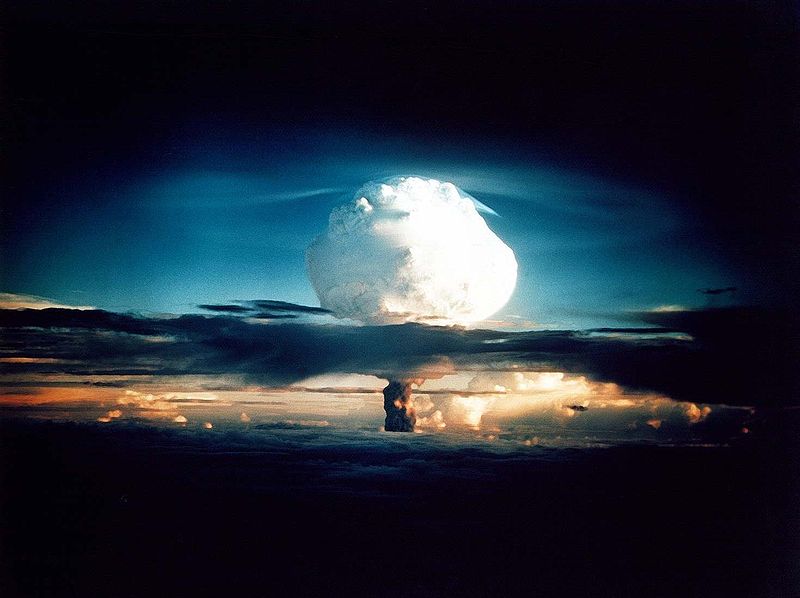
One of the most spectacular – and controversial – accomplishments of US technology has been the harnessing of nuclear energy. The concepts that led to the splitting of the atom were developed by the scientists of many countries, but the conversion of these ideas into the reality of nuclear fission was accomplished in the United States in early 1940s, both by many Americans but also aided tremendously by the influx of European intellectuals fleeing the growing conflagration sparked by Adolf Hitler and Benito Mussolini in Europe.
During these crucial years, a number of the most prominent European scientists, especially physicists, immigrated to the United States, where they would do much of their most important work; these included Hans Bethe,Albert Einstein, Enrico Fermi, Leó Szilárd, Edward Teller, Felix Bloch, Emilio Segrè, and Eugene Wigner, among many, many others. American academics worked hard to find positions at laboratories and universities for their European colleagues.
After German physicists split a uranium nucleus in 1938, a number of scientists concluded that a nuclear chain reaction was feasible and possible. In a letter to President Franklin Roosevelt, written by Leó Szilárd and signed by Albert Einstein, warned that this breakthrough would permit the construction of "extremely powerful bombs." This warning inspired an executive order towards the investigation of using uranium as a weapon, which later was superseded during World War II by the Manhattan Project the full Allied effort to be the first to build an atomic bomb. The project bore fruit when the first such bomb was exploded in New Mexico on July 16, 1945.
The development of the bomb and its use against Japan in August 1945 initiated the Atomic Age, a time of anxiety over weapons of mass destruction that has lasted through the Cold War and down to the anti-proliferation efforts of today. Even so, the Atomic Age has also been characterized by peaceful uses of nuclear power, as in the advances in nuclear power and nuclear medicine.
Along with the production of the atomic bomb, World War II also saw the entrance of an era known as "Big Science" with increased government patronage of scientific research. The advantage of a scientifically and technologically sophisticated country became all too apparent during wartime, and in the ideological Cold War to follow the importance of scientific strength in even peacetime applications became too much for the government to any more leave to philanthropy and private industry alone. This increased expenditure on scientific research and education propelled the United States to the forefront of the international scientific community—an amazing feat for a country which only a few decades before still had to send its most promising students to Europe for extensive scientific education.
The first US commercial nuclear power plant started operation in Illinois in 1956. At the time, the future for nuclear energy in the United States looked bright. But opponents criticized the safety of power plants and questioned whether safe disposal of nuclear waste could be assured. A 1979 accident at Three Mile Island in Pennsylvania turned many Americans against nuclear power. The cost of building a nuclear power plant escalated, and other, more economical sources of power began to look more appealing. During the 1970s and 1980s, plans for several nuclear plants were cancelled, and the future of nuclear power remains in a state of uncertainty in the United States.
Meanwhile, American scientists have been experimenting with other renewable energy, including solar power. Although solar power generation is still not economical in much of the United States, recent developments might make it more affordable.
Saturday, 14 April 2012
About Science
This blog is all about science and technology.I hope you like it:
1.Science: Science and technology have improved our life in many ways.first of all, sciencetogether with technology plays a strong role in the industrialization as well as modernization of the world. Its clearly seen that robots are now replacing humans in many factory especially nuclear ones. Moreover ,there is no doubt that our daily life has been made a lot more convenient thanks to the help of science and technology
Scientific advances and technological change are important drivers of
recent economic performance. The ability to create, distribute and
exploit knowledge has become a major source of competitive advantage, wealth creation and improvements in the quality of life.
2.Science and technology in our life:
Technology plays an important role in our life .In our world i don't see any person without technology
Science and technology affects our daily life today because it helps us know things and it also helps us understand things around us. Science and technology are interreleted. Science deals with understanding while technology deals with doing. Science helps us to know how to do something more efficiently. Everyone uses a computer in their everyday life for many different reasons. We live in a country that is high-tech and most people want to learn new things
.
Subscribe to:
Posts (Atom)